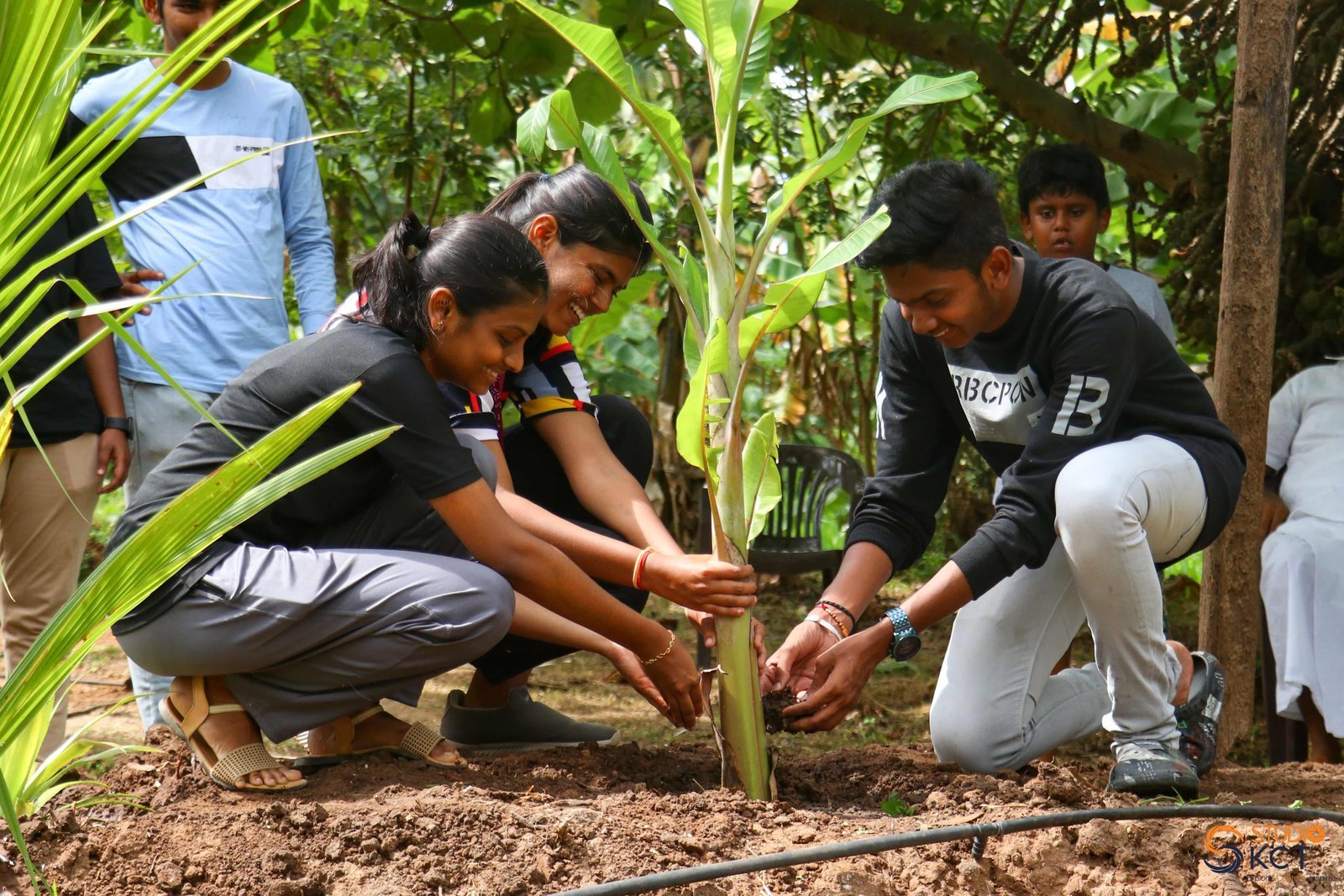
Overview: Kumaraguru Institutions designed and delivered four specialized courses on Environment and Sustainability. Each course engaged 20 students in 25 hours of interactive sessions and hands-on activities. The initiative aimed to foster ecological awareness and promote sustainable practices among students through experiential learning.
Project Description
As part of its commitment to sustainability, Kumaraguru Institutions designed and delivered four specialized courses focused on Environment and Sustainability. Each course engaged 20 students for 25 hours, immersing them in interactive sessions and hands-on activities aimed at fostering ecological awareness and sustainable practices.
Permaculture – A Biomimetic Approach to Sustainable Living Students explored nature-inspired design principles that promote self-sustaining ecosystems, helping them understand how to integrate sustainability into everyday life.
Kitchen and Terrace Gardening – Cultivating Green Spaces in Urban Environments: This course empowered students with practical skills in growing food in small urban spaces, promoting self-sufficiency and biodiversity conservation.
Naturalist Training Program – Deepening Connection with Nature Through field-based learning, students developed observation skills and a deeper appreciation for local ecosystems, wildlife, and conservation efforts.
Waste Management – Innovative Solutions for a Cleaner Planet Focusing on waste reduction, recycling, and upcycling, this course encouraged students to develop creative solutions for minimizing environmental impact.
By integrating these courses, Kumaraguru Institutions is shaping the next generation of eco-conscious leaders, equipping them with knowledge and skills to create a more sustainable future.
Key Highlights
- Hands-on Sustainability Learning: Four specialized courses covering permaculture, gardening, naturalist training, and waste management.
- Engaged Learning Model: 80 students participated in 100+ hours of immersive sessions and activities.
- Practical Implementation: 80% of students applied sustainable practices at home or in their communities.
- Skill Development: Participants gained knowledge in eco-friendly living, biodiversity conservation, and waste reduction strategies.
Focus Area: Awareness