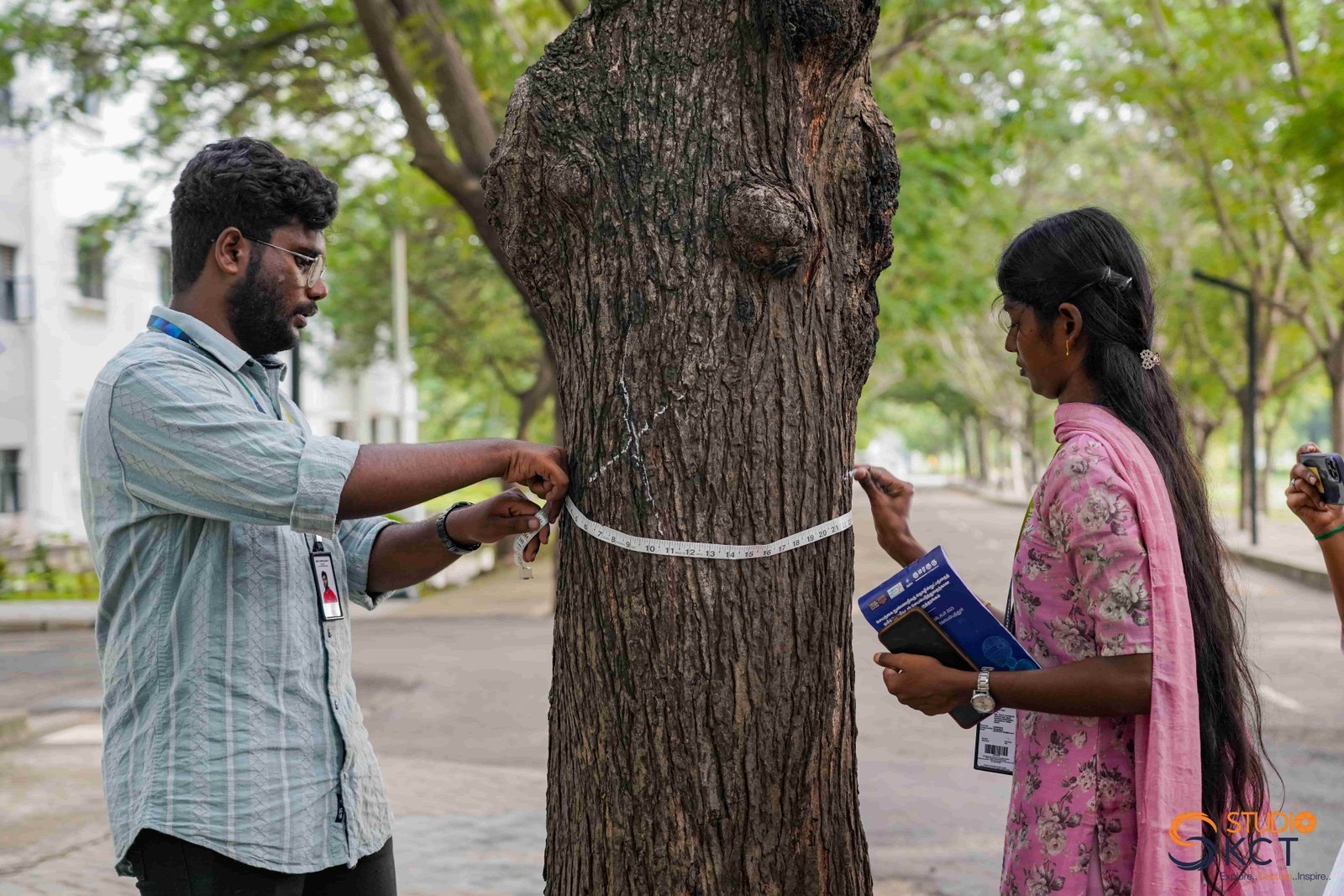
Overview: The Tree Survey Census at Kumaraguru Campus involved KIA students in documenting diverse tree species across the 150-acre campus. Conducted in three phases, the survey recorded 3,600 trees. It captured key data including location, species names, girth, height, and potential threats, contributing to ecological awareness and conservation planning.
Project Description
The Tree Survey Census at Kumaraguru Campus was a collaborative effort involving students from Kumaraguru Institute of Agriculture (KIA) to catalog and document the diverse tree species across the 150-acre campus. Conducted in three detailed phases, the survey documented 3,600 trees, capturing essential data such as latitude, longitude, altitude, common and scientific names, girth and height ranges, and potential threats to each species.
Each phase of the survey spanned 20 hours, with 20+ volunteers per phase, totaling 60 volunteers and contributing over 1,200 volunteering hours. The active participation of KIA students played a pivotal role in ensuring a meticulous and comprehensive assessment of the campus’s green cover.
This initiative provides valuable insights into the ecological landscape of Kumaraguru, supporting conservation efforts and fostering sustainable campus management. The collected data will aid in future tree plantation drives, biodiversity preservation, and climate adaptation strategies. The dedication of the volunteers from KIA highlights their commitment to environmental sustainability, reinforcing the institution’s vision of promoting ecological awareness and responsible stewardship of natural resources.
Key Highlights
- Comprehensive Biodiversity Mapping: Documented diverse tree species across the 150-acre Kumaraguru campus.
- Data-Driven Conservation: Provides valuable insights for campus greening initiatives and ecological restoration.
- Carbon Sequestration Assessment: Helps estimate the campus’s contribution to carbon absorption and climate resilience.
Focus Area: Biodiversity Enrichment