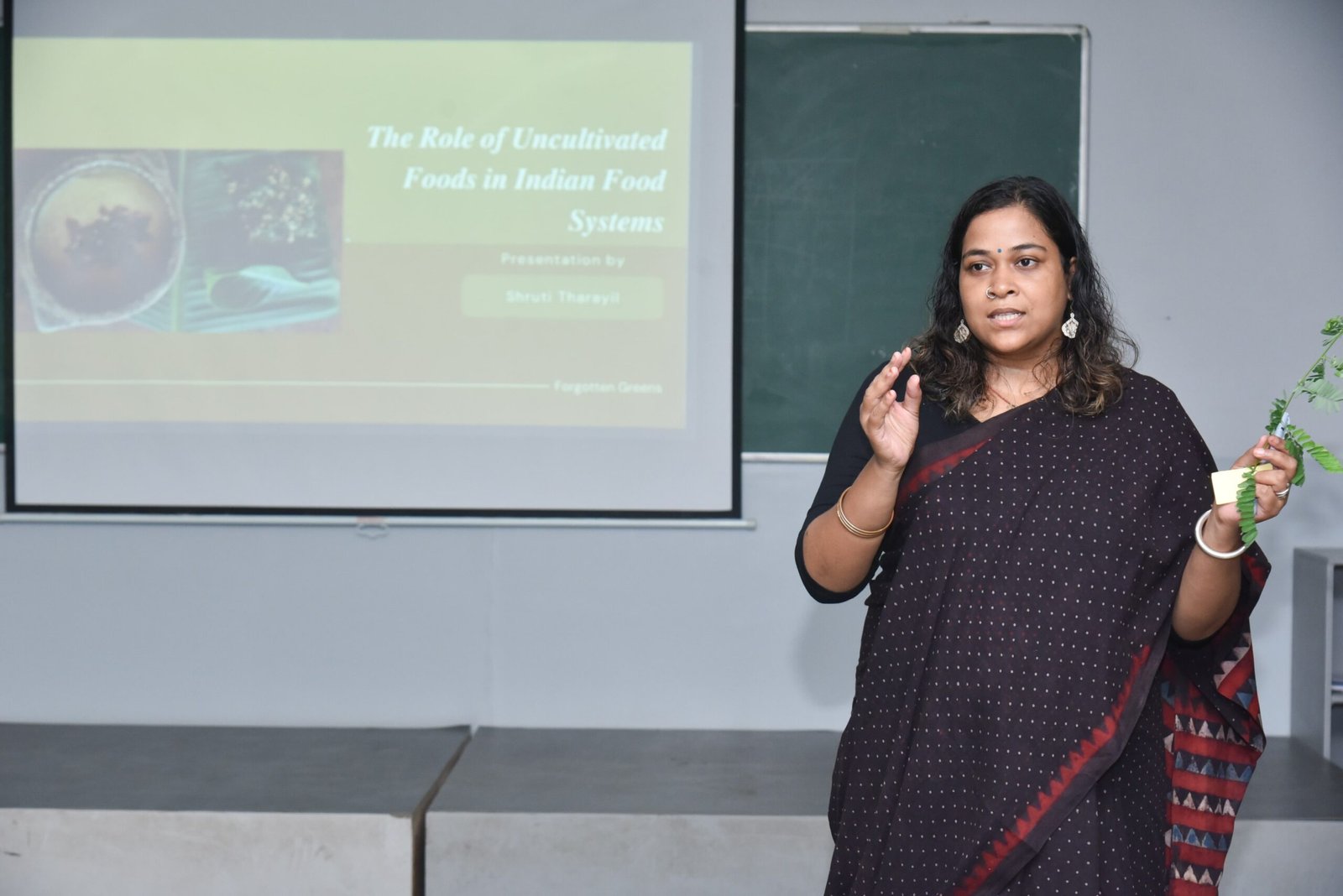
Overview: The Wild Food Talk by Ms. Shruthi Tharayil engaged 40 participants, including students and faculty, in identifying edible wild plants. The session emphasized sustainable foraging and respecting ecological balance. Attendees learned to recognize edible species and understand their nutritional benefits, deepening their knowledge of biodiversity and traditional food sources.
Project Description
The Wild Food Talk by Ms. Shruthi Tharayil provided an insightful session on identifying edible plant species in the wild, engaging 40 participants, including students, faculty, and external guests. The session emphasized sustainable foraging practices, encouraging participants to explore nature’s abundance while respecting ecological balance. Attendees gained practical knowledge about distinguishing edible wild plants and their nutritional benefits, enhancing their understanding of biodiversity and traditional food sources.
On Day 1 (23rd October 2024), the herbal walk commenced at 9:30 AM, allowing participants to explore and identify 63 plant species before concluding for lunch at 12:30 PM. Experts guided the attendees through the diverse flora, explaining the medicinal properties of each plant.
On Day 2 (24th October 2024), the survey continued from 6:30 AM to 12:30 PM, adding 28 more species to the documented list. By the end of the survey, a total of 91 medicinal plant species were cataloged, highlighting the rich botanical diversity of the region.
Dr. Manikandan, one of the key resource persons, provided valuable insights into traditional medicinal plants, their therapeutic uses, and their significance in sustainable health practices. His expertise enriched the discussions and deepened participants’ understanding of the practical applications of wild and medicinal plants.
The event fostered a deeper appreciation for native plant knowledge and sustainable practices, inspiring participants to explore the potential of wild edibles and medicinal plants in daily life. It also laid the groundwork for future research and educational initiatives in herbal conservation.
Key Highlights
- Promoting Sustainable Foraging: Encouraging the consumption of naturally available, nutrient-rich, chemical-free food.
- Nutritional Benefits: Increases access to highly nutritious, organic food sources, improving overall health and well-being.
- Enhancing Dietary Diversity: Advocating for foraging as a means to introduce diverse nutrients into everyday meals
- Environmental Impact Reduction: Reduces reliance on commercially grown, chemically treated food, lowering carbon footprint.
Focus Area: Awareness